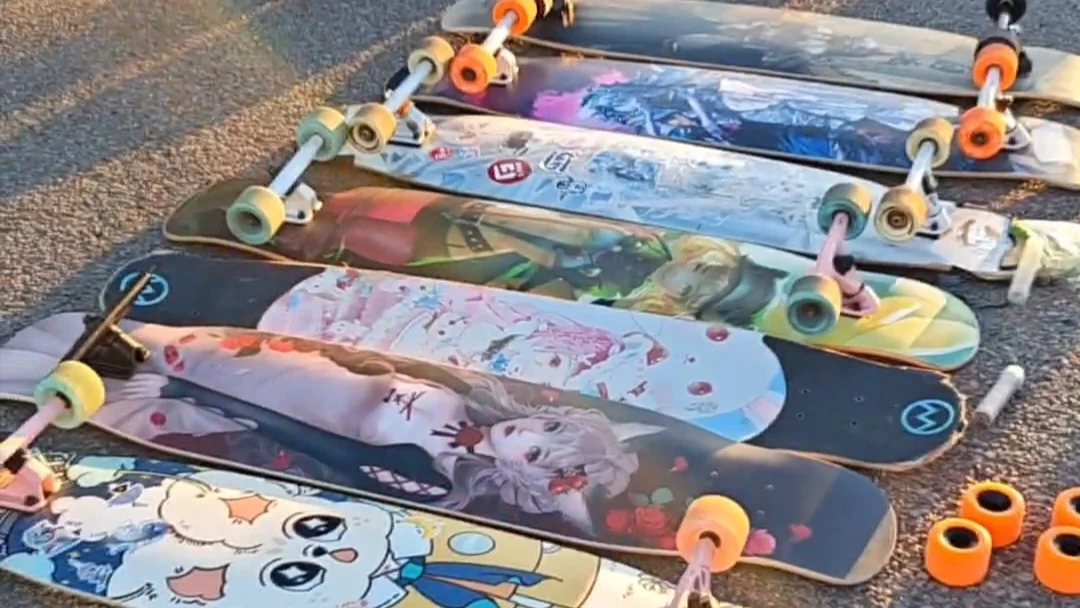
Walk into a skate shop (or scroll one) and you'll see dozens of shapes: short ones, long ones, boards with kicks, boards with fish tails, boards with wheels the size of a fist. They all roll, but they're built for very different days.
The good news: you don't need to know every term. Start with one question.
Where and how do you want to ride?
- Learning tricks at the skatepark: a skateboard
- Short trips with a board that fits in your bag: a mini cruiser
- Getting around town: a cruiser or an ATV hybrid
- Carving and pumping like you're surfing a wave: a surf skate
- Long, smooth carves: a cruiser longboard
- Dancing, footwork and freestyle tricks: a dancer
- A low, stable ride and easy pushing for longer distances: a drop deck
- Speed on hills: a downhill or freeride board
Find yourself in that list and jump to that section. If two sound good, read both: lots of riders end up with more than one board.
The types of boards at a glance
| Board | Length | Wheels | Best for |
|---|---|---|---|
| Skateboard | 28–33″ | Small, hard | Tricks, the skatepark |
| Mini cruiser | 22–27″ | Soft | Short trips, carrying |
| Cruiser | 28–36″ | Soft | Getting around town |
| ATV hybrid | Skateboard size | Soft, cruiser size | Tricks and cruising |
| Surf skate | Around 30–34″ | Soft | Carving, pump tracks, fun cruising |
| Cruiser longboard | 36″ and up | Big, soft | Long, smooth carves |
| Dancer | 42–48″ | Soft, cruiser size | Dancing, freestyle, cruising |
| Drop deck | Longboard size | Big, soft | Stability, pushing far |
| Downhill and freeride | A bit shorter than a longboard | Big | Speed and slides, for experienced riders |
The parts of a board
Deck, trucks and wheels, and the words you’ll see on every board.
Every board has three main parts:
- Deck: the board you stand on. Its length, width, shape and flex decide most of how it feels.
- Trucks: the metal axles under the deck. They turn the board when you lean.
- Wheels: bigger, softer wheels roll over cracks and rough roads; smaller, harder wheels are lighter and better for tricks.
A few words you'll see on every product page:
- Length and width: longer, wider boards are more stable; shorter boards turn quicker and are easier to carry.
- Flex: how much the deck bends under you. A flexy deck feels springy and smooth; a stiff deck feels solid and precise.
- Concave: the curve across the deck. It locks your feet in and helps the board answer your toes and heels.
- Nose and tail: the ends. When they bend up (a kick), you can pop the board, pivot on it, or lift the front over a crack.
Skateboard
The classic trick board.
- 28–33″
- Kick on both ends
- Small hard wheels
- Tricks
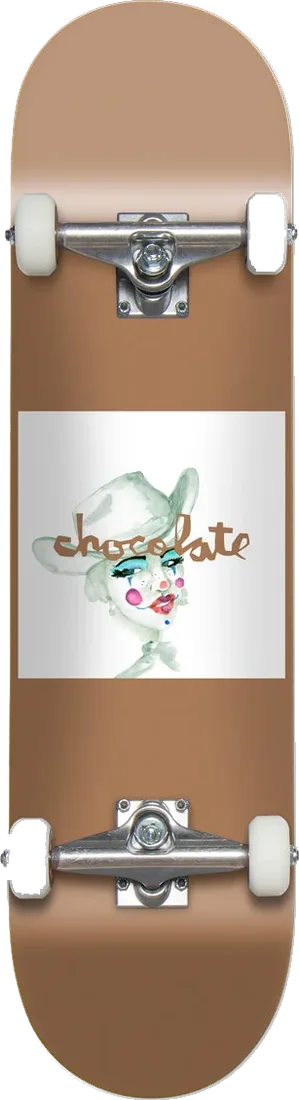
The classic. A short deck (around 28 to 33 inches) with a kick on both ends, hard wheels and narrow trucks.
- Made for tricks: ollies, kickflips, grinds, the skatepark and the street
- Light and easy to carry
- Small, hard wheels feel every crack, so it's not the smoothest way to travel
Mini cruiser
Tiny, light and smooth over rough ground.
- 22–27″
- Soft wheels
- Fits in a bag
- Short trips
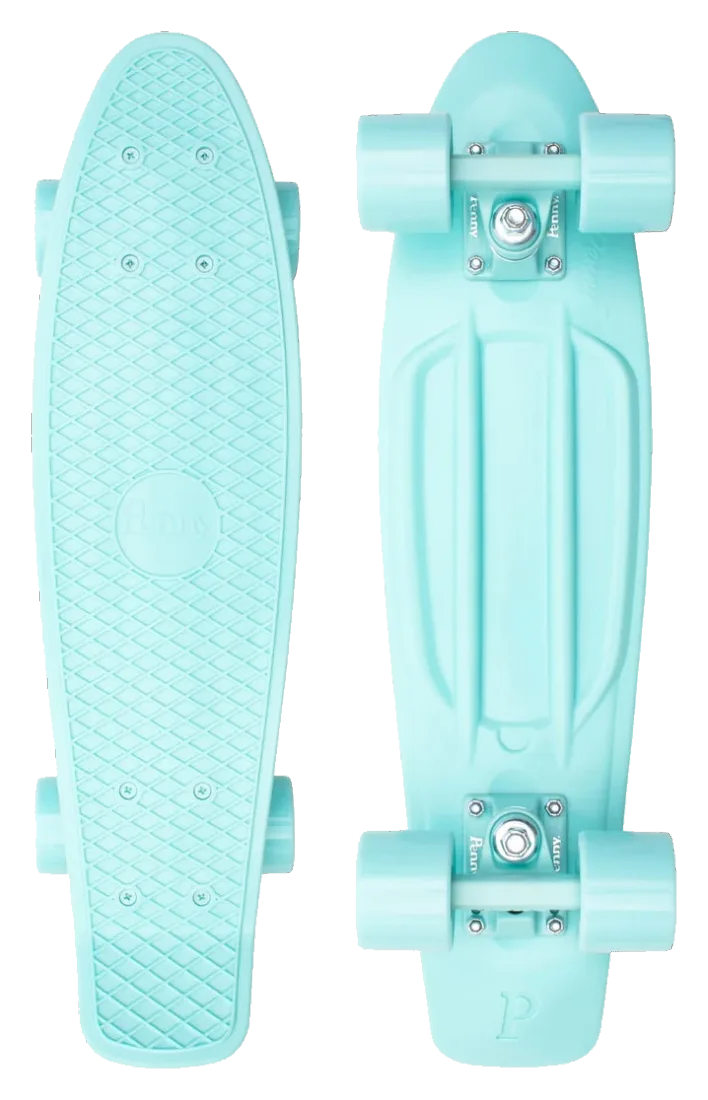
A small board, often plastic, around 22 to 27 inches, with soft wheels. People often call these "penny boards" after the brand that made them popular.
- Very portable: fits in a backpack or under a desk
- Soft wheels roll smoothly over rough pavement
- The short deck is twitchy, so it takes some balance at speed
Cruiser
Easy riding around town.
- 28–36″
- Kicktail
- Soft wheels
- Commuting
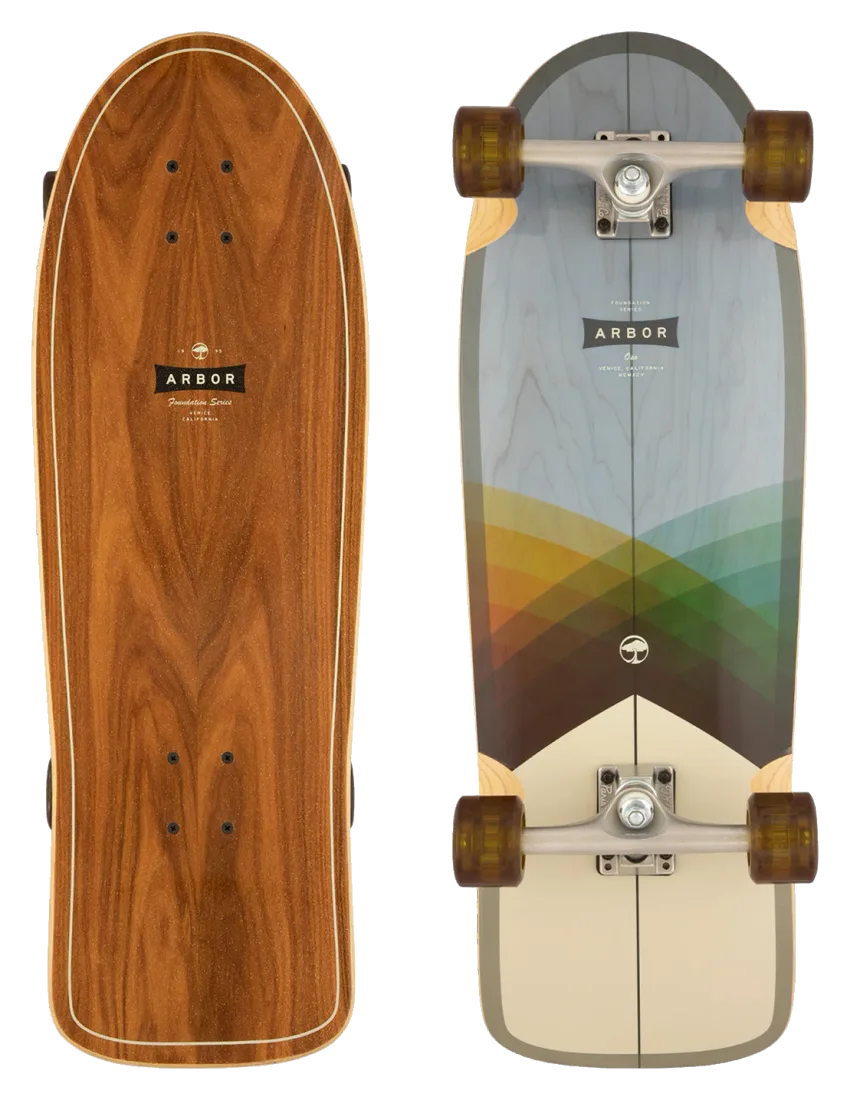
In between a skateboard and a longboard: around 28 to 36 inches, usually with a kicktail and soft wheels.
- Great for getting around the city
- The kicktail helps you turn sharply and hop up curbs
- Comfortable for learning to push, turn and stop
ATV hybrid
A skateboard’s shape on a cruiser’s wheels.
- Nose and tail
- Cruiser wheels
- Tricks and cruising
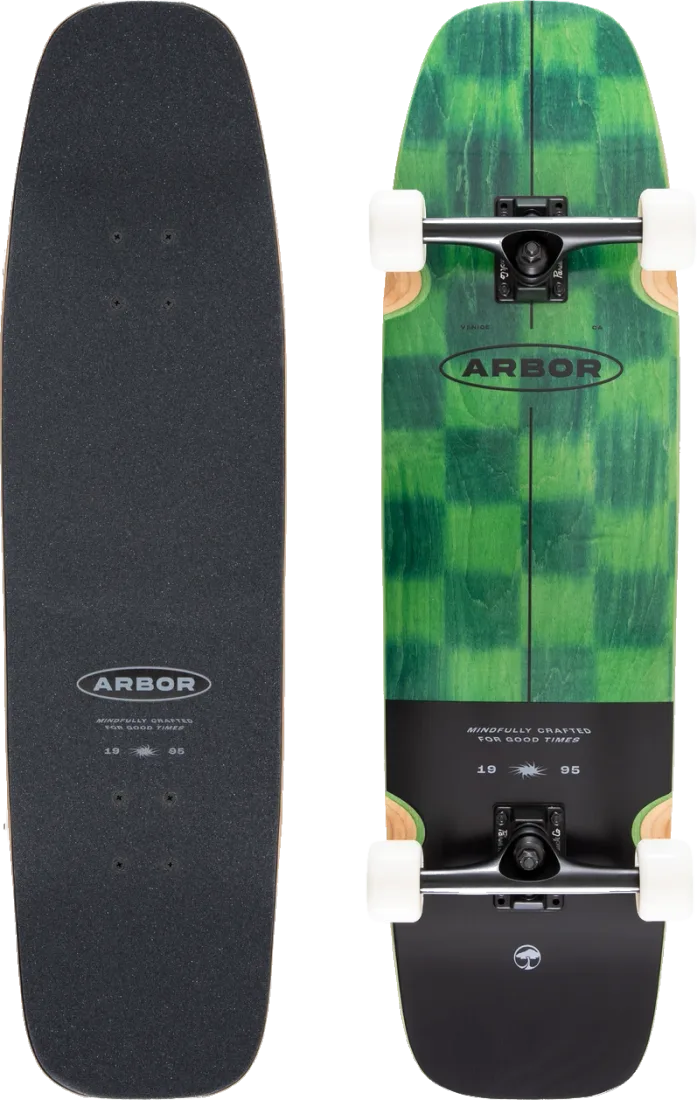
ATV stands for all-terrain vehicle: a hybrid of a skateboard and a cruiser. It has a skateboard's shape, with a nose and tail (often symmetrical), so you can do full skateboard tricks. Underneath are a cruiser's soft wheels and trucks, so it also rolls over all sorts of street terrain.
- Tricks, ledges and the skatepark, like a skateboard
- Rough roads, cracks and long cruises, like a cruiser
- One board for riders who want to do a bit of everything
Surf skate
Surf the street: pump, carve, repeat.
- Surf front truck
- Pump without pushing
- Pump tracks
- Easy to technical
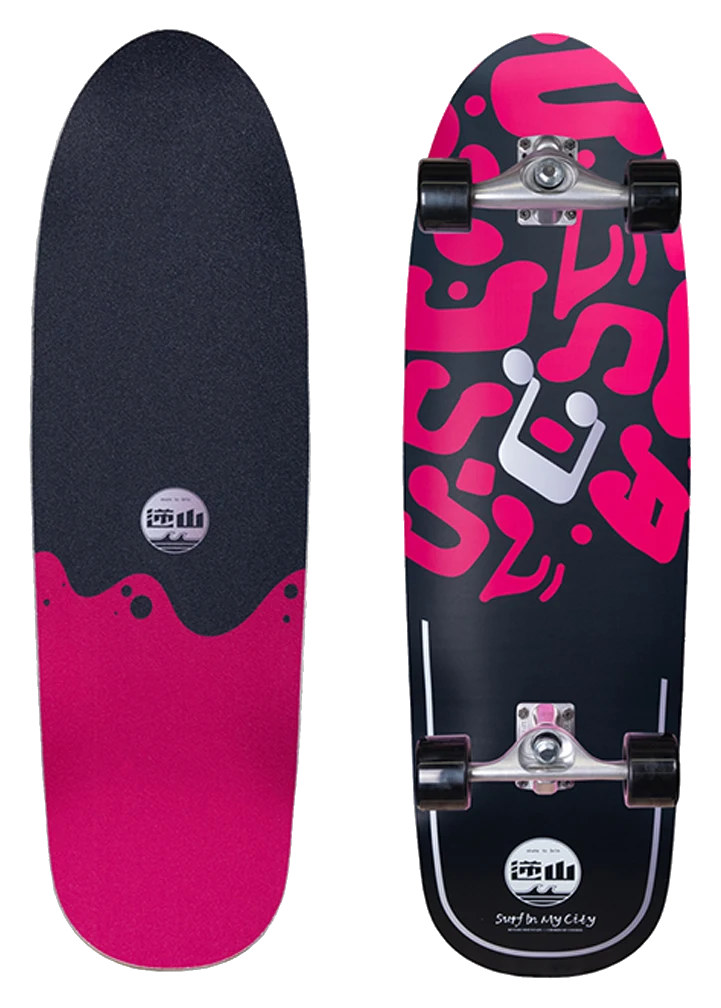
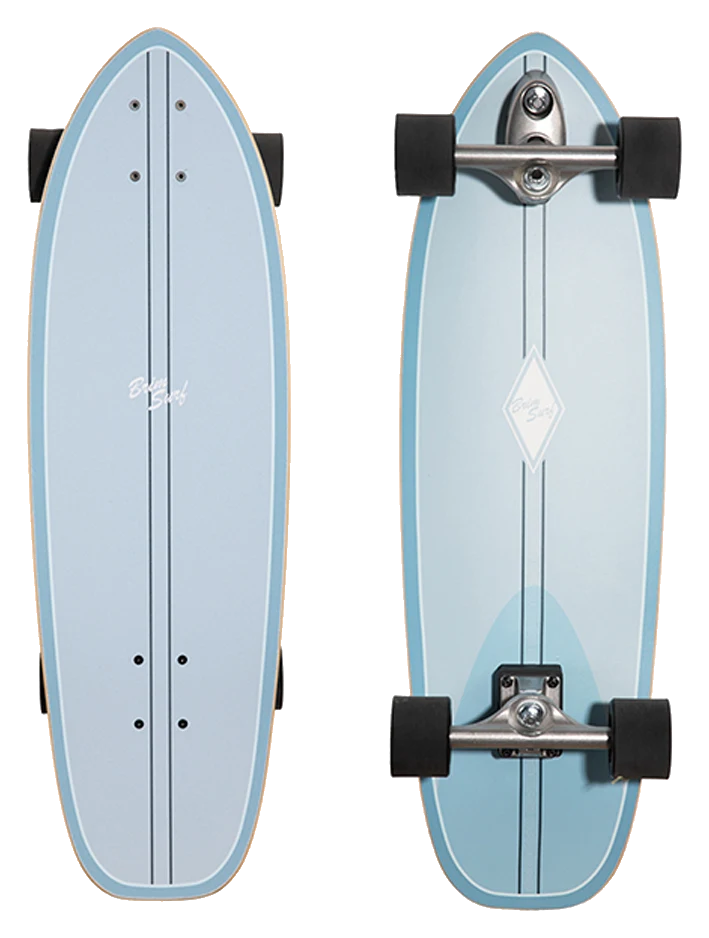
A surf skate has a special front truck that turns much further and springs back to centre. That lets you pump: build speed by twisting your body the way a surfer does on a wave, without pushing with your foot.
- Practise surf moves on land: carves, cutbacks, pumping
- Cruise the city, or ride pump tracks and the ramps at the skatepark
- The high tail is made for kick turns and pivots, and some riders do skateboard and freestyle tricks on them too
A surf skate is easy fun from day one: just cruise and carve. It can also get as technical as you want, so it grows with you.
Nishan surf skates are coming soon.
Cruiser longboards: pintail, kicktail, fishtail
Long, smooth, relaxed carving.
- 36″ and up
- Big soft wheels
- Stable
- Carving
Pintail
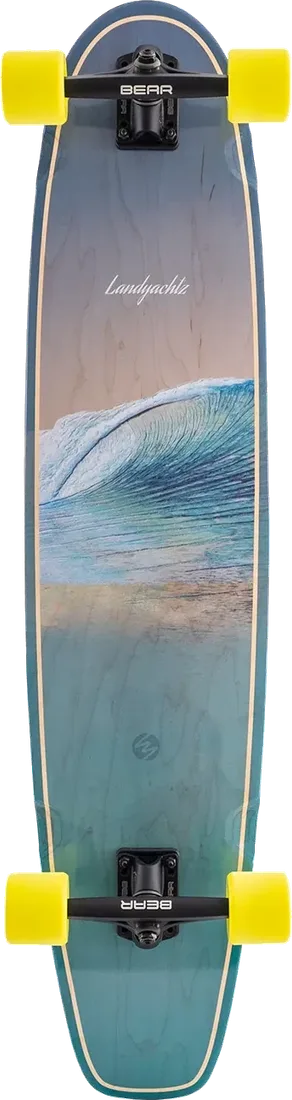
Kicktail
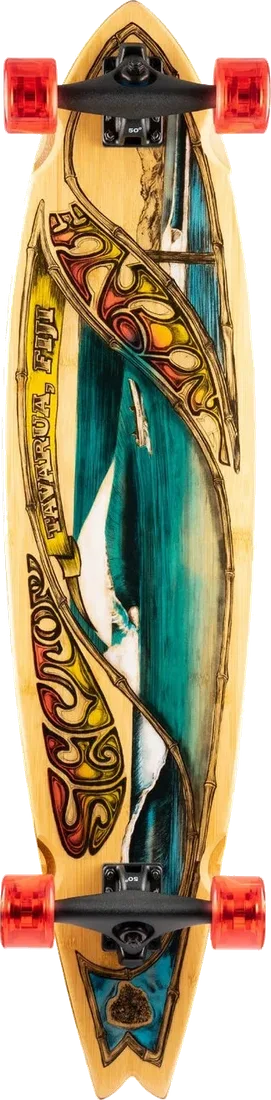
Fishtail
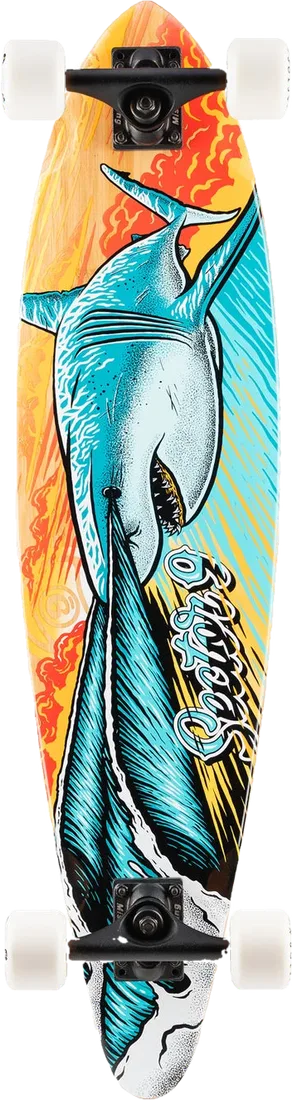
A longboard is any board longer than about 36 inches. Longer decks and big soft wheels make them stable and smooth, which is why many beginners learn on one. The outline tells you what each is for:
- Pintail: a teardrop shape, narrow at the tail. Made for long, flowing carves, like a surfboard. A classic first cruiser.
- Kicktail: a longboard with an upturned tail (sometimes both ends) for sharp turns, kick turns and small tricks.
- Fishtail: a tail split like a fish's, borrowed from surfboards. Made for carving, with style.
Dancer
Room to walk, dance and flip.
- 42–48″
- Kick on both ends
- Top mount
- Freestyle and cruising
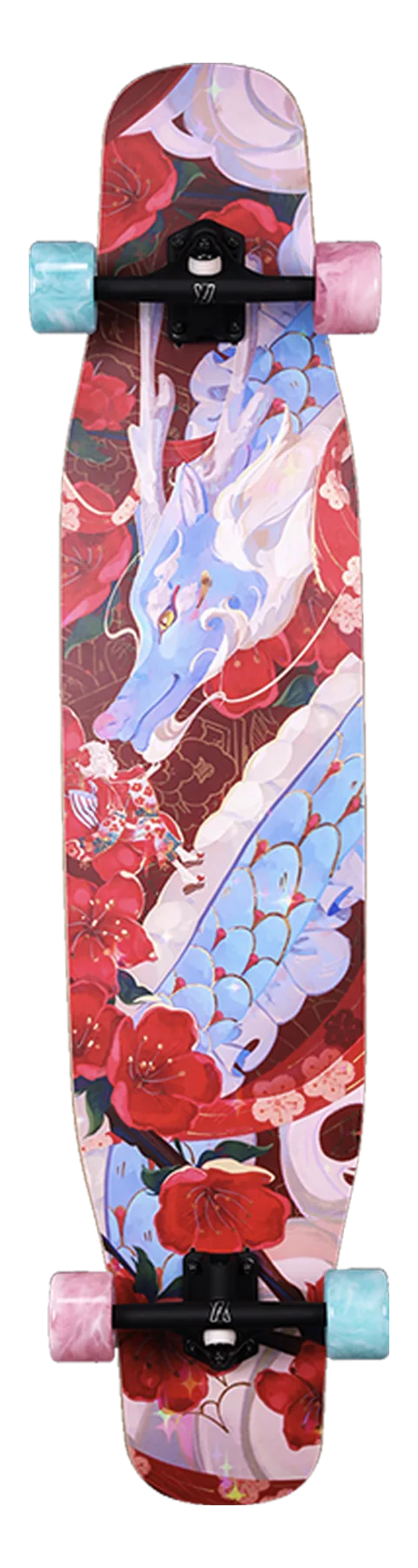
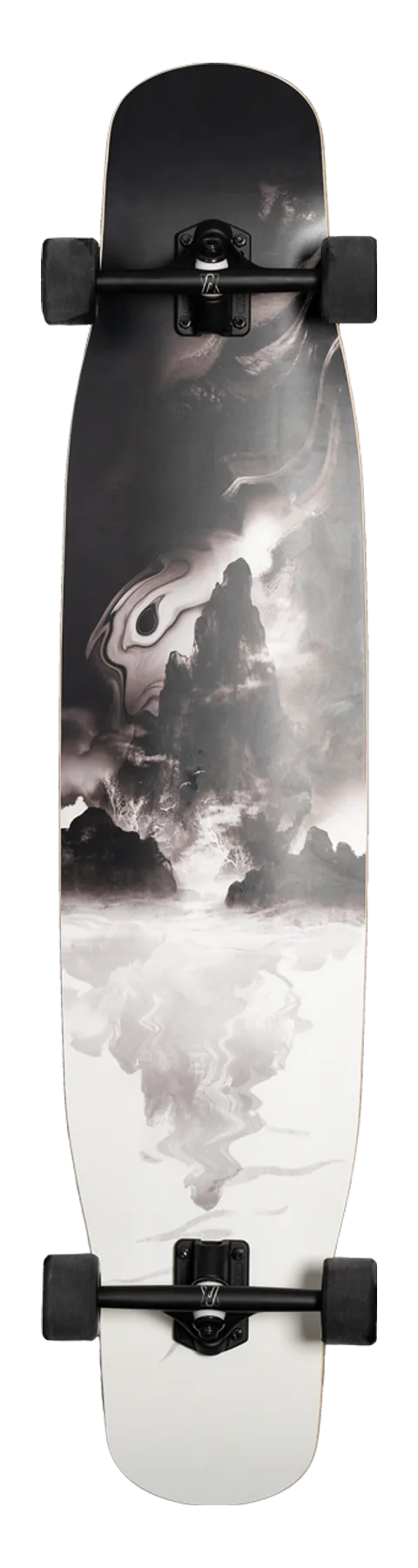
This is the board we know best.
A dancer (or freestyle longboard) is a long deck, usually 42 to 48 inches, with a kick on both ends and the trucks bolted underneath (top mount). The length gives you room to walk the board: cross-steps, spins, footwork and flowing tricks, all while rolling. Longboard dancing looks like a mix of skating and dance, and it's one of the most creative ways to ride.
It's also a great all-rounder. A dancer cruises comfortably around town, so you can ride to the spot and dance when you get there.
From Nishan
Nishan makes dancer boards, and they're what we carry. These two show how much the flex changes the feel:
- Auspicious Dragon (44.1″ × 9.1″, flexy): light and agile, with a springy, comfortable feel that helps tricks flow into smooth combos. A friendly first dancer.
- Double Shadow (44.1″ × 9.1″, stiff): strong and supportive, built for precise, technical flatland tricks.
Same size, different feel: a softer flex forgives and bounces; a stiffer flex answers exactly what your feet do. Not sure? Start softer.
Drop decks: drop-through, drop-down, double drop
Lower to the ground: steadier and easier to push.
- Drop-through
- Drop-down
- Double drop
- Distance
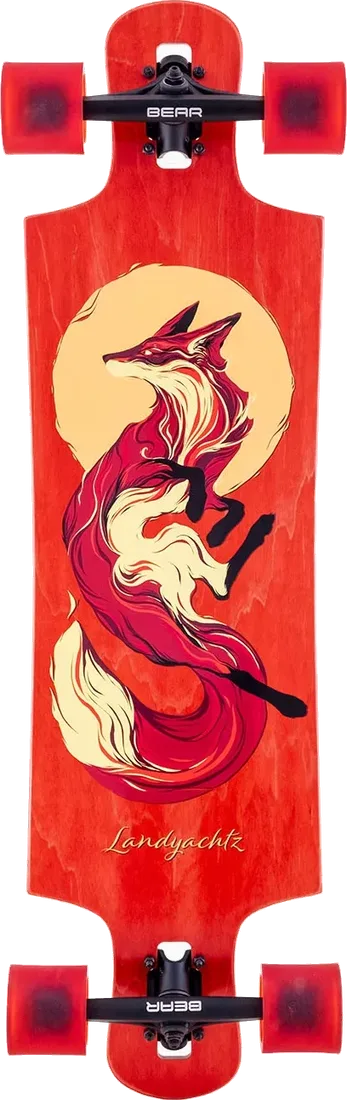
Drop-through
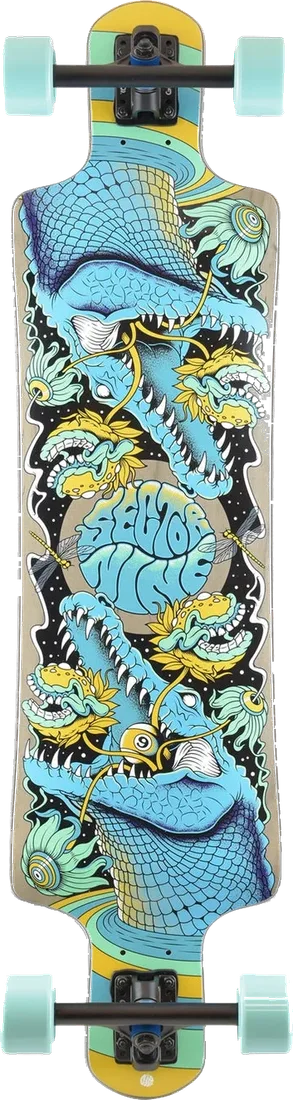
Drop-down
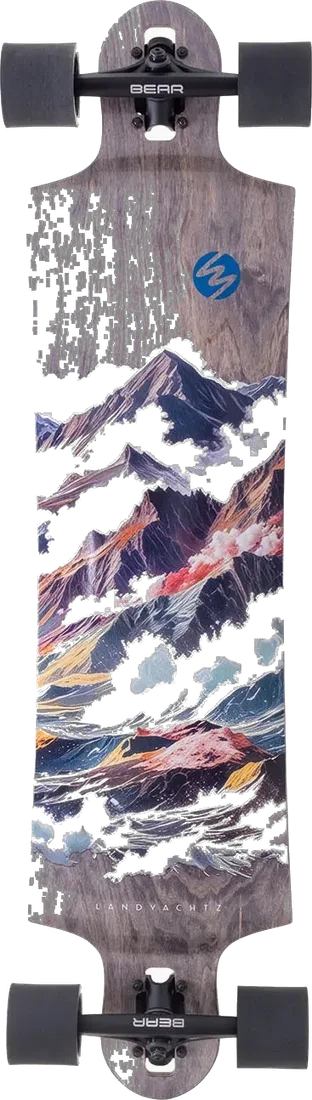
Double drop
On most boards the deck sits on top of the trucks (top mount). A drop deck sits lower, and lower means steadier and easier to push.
- Drop-through: the trucks mount through holes in the deck, and the deck has cutouts around the wheels, so there's no wheel bite (a wheel rubbing the deck in a turn). Deck, trucks and wheels sit tight together, low to the ground.
- Drop-down: the standing platform is lowered below where the trucks mount, for an even lower, steadier stance.
- Double drop: an extra-lowered standing platform, almost touching the ground. These are often sold as LDP boards, for long-distance pushing with the least fatigue. Some LDP boards have a narrower platform, so your pushing foot reaches the ground with even less effort.
Some riders use drop decks for downhill and freeride too: sitting low keeps them steady at speed.
Downhill and freeride
Built for speed and slides.
- Stiff and low
- Trucks at the ends
- Protective gear
- Not a first board
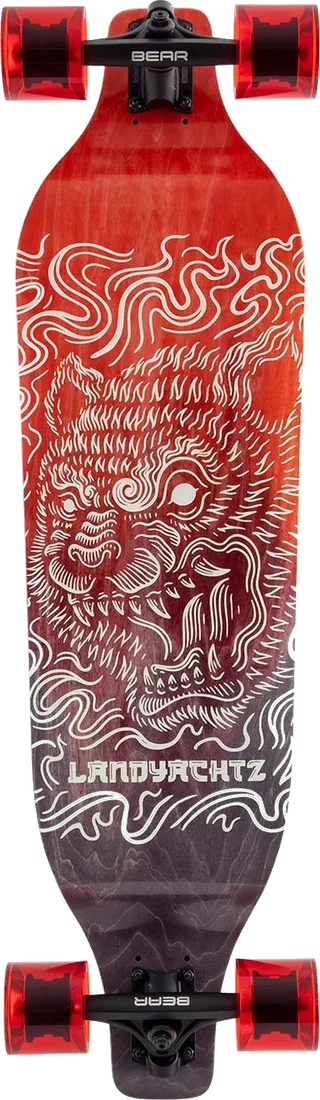
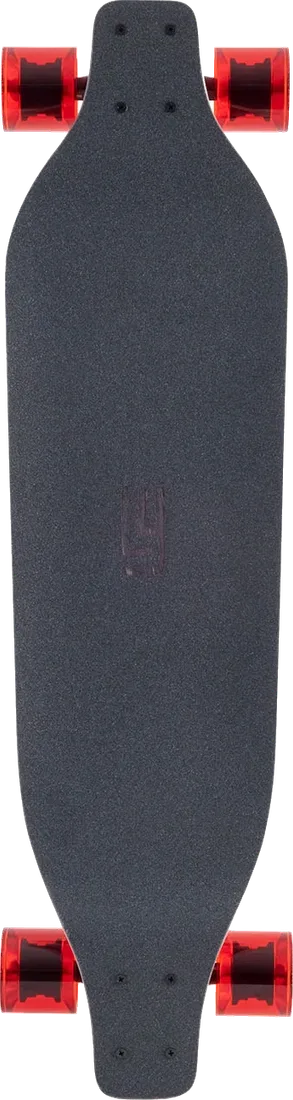
Boards for speed. They're stiff, low and stable, often a bit shorter than other longboards, with the trucks set right at the ends of the deck.
- Downhill: built to stay steady at high speed
- Freeride: built for sliding sideways to control speed, and for style on the way down
- Needs real protective gear (a full-face helmet, slide gloves) and practice
So which one is right for you?
There's no wrong first board, only one that suits how you want to ride. A few tips:
- Choose for the riding you'll actually do. A board you love riding beats the "best" board that sits in the closet.
- Stability helps. Longer, wider decks with soft wheels are easier to learn on.
- Softer flex is friendlier for most beginners; stiffer flex suits technical tricks and speed.
- A complete board is the easy start. Our Nishan boards come as a deck only, or as a complete with trucks and wheels already fitted (Stock Complete or Pro Complete).
- Wear a helmet, and learn on smooth, flat, empty ground before you try hills.
Still not sure? Ask us: tell us how you want to ride and we'll point you to a board. Or come to an event and try a few. We're in Toronto, and we ship across Canada and the US.